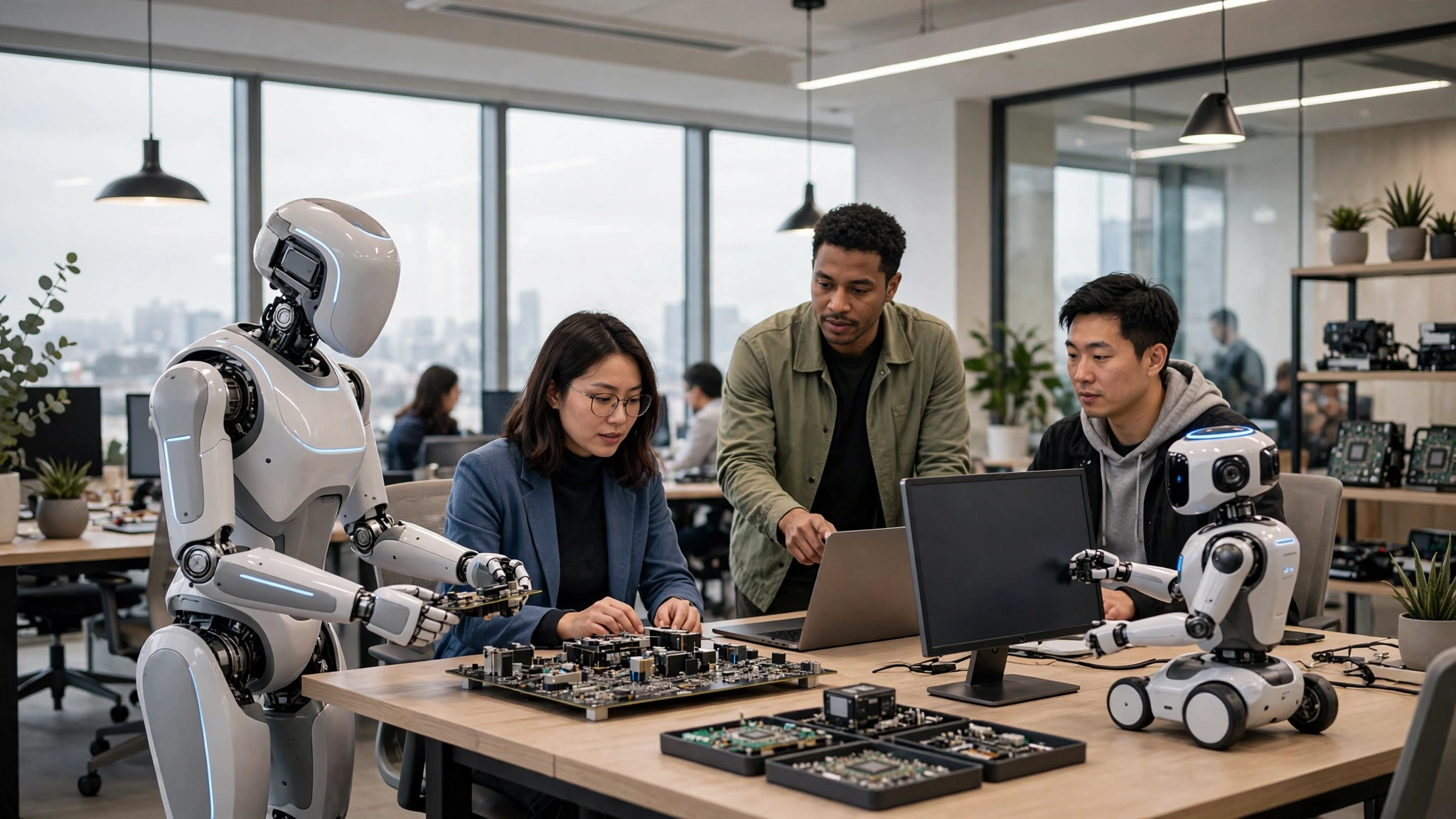
The tech industry is experiencing its biggest shift since the launch of the commercial internet. Generative AI and advanced automation tools have left engineers, data scientists, and digital professionals asking the same urgent question: Will AI take tech jobs, or is automation simply changing how we work?
The narrative around automation often swings between extreme panic and blind optimism. Headlines warn of mass layoffs, while tech leaders promise an era of unprecedented productivity. The real story lies somewhere in the middle. AI is not eliminating tech careers; it is fundamentally restructuring them.
Will AI Take Tech Jobs? The Shift from Job Displacement to Job Evolution
The short answer is no, AI will not completely replace human tech professionals. However, tech professionals who leverage AI will replace those who do not.
Automation is taking over repetitive, low-level operational tasks. It is not replacing the critical thinking, domain knowledge, and creative problem-solving that human tech workers bring to the table.
The Productivity Boom vs. The Automation Panic
Reports from global advisory firms reveal a clear trend: AI acts primarily as a force multiplier. Research from PwC indicates that companies heavily integrating AI experience double-digit increases in productivity while simultaneously expanding headcount in high-skill areas.
Rather than rendering developers or data analysts obsolete, tools like automated code generators and machine-learning diagnostic software allow teams to ship products faster and focus on complex architecture.
Why Full Automation in Tech Is a Myth
- Context and Nuance: AI lacks the business acumen and emotional intelligence needed to translate vague client requirements into secure software systems.
- System Architecture: Designing fault-tolerant, scalable, and secure system architectures requires high-level abstract reasoning.
- Security and Reliability: AI models frequently generate code containing security vulnerabilities, requiring experienced engineers for verification, testing, and compliance.
Which Tech Roles Are Changing the Most?
The impact of automation across the tech landscape is not uniform. Some roles are experiencing structural decline, while others are growing rapidly.
+---------------------------+-----------------------------------+------------------------------------+
| Tech Discipline           | Tasks Being Automated             | Expanding Human Responsibilities   |
+---------------------------+-----------------------------------+------------------------------------+
| Software Engineering      | Boilerplate code, basic debugging | System architecture, code review   |
| Quality Assurance (QA)    | Basic regression testing          | Security testing, edge-case design |
| Data & Analytics          | Data cleaning, routine ETL pipelines| Strategic analytics, AI model fine-tuning |
| IT Operations & Support   | Password resets, tier-1 ticketing | Cloud security, infrastructure design|
+---------------------------+-----------------------------------+------------------------------------+
Software Development: From Writing Code to Directing Systems
Software engineers no longer spend hours writing repetitive boilerplate code. Large Language Models (LLMs) can generate functional code blocks in seconds.
The primary developer workload has shifted toward code review, security oversight, edge-case handling, and software architecture. Developers are transforming into tech managers who direct AI agents to execute routine tasks.
Quality Assurance and Maintenance: The Shift to High-Level Oversight
Basic script-writing and manual regression testing are rapidly being automated. Modern QA specialists now focus on complex edge-case scenario planning, AI vulnerability management, and ensuring compliance across integrated software environments.
Data Engineering and Analytics: Focusing on Business Strategy
Data cleanup and basic reporting—tasks that once took up 70% of a data analyst’s time—are now largely handled by machine learning algorithms. This shift frees data professionals to focus on predictive modeling, strategic decision-making, and custom model training.
The New High-Demand Tech Jobs Created by Automation
While automation reduces the need for manual execution, it creates entirely new categories of high-paying tech careers. The World Economic Forum estimates that while legacy positions will consolidate, millions of net-new tech roles will emerge around AI deployment, governance, and optimization.
AI & Machine Learning Engineers
Building, training, and fine-tuning custom domain models requires deep technical expertise. AI engineers who understand how to deploy large-scale parameters efficiently remain among the most sought-after talent in technology.
Cybersecurity and AI Risk Specialists
As companies deploy automated code and AI systems, their attack surfaces grow. Cybersecurity professionals who specialize in protecting models against prompt injection, data poisoning, and automated vulnerabilities are essential to enterprise stability.
AI Ethics and Compliance Officers
With new government regulations governing algorithmic transparency and data privacy, organizations are hiring specialists to ensure their automated tools operate legally, fairly, and ethically.
How Tech Professionals Can Future-Proof Their Careers
Surviving and thriving in an automated tech landscape requires a deliberate shift in skill development. Relying purely on basic technical syntax is no longer enough.
1. Shift Mindset from “Coder” to “Problem Solver”
Focus on understanding end-to-end business problems rather than just typing lines of code. AI can write a function, but it cannot determine whether that function solves a business challenge efficiently.
2. Master AI Augmentation Tools
Incorporate AI development tools into your daily workflow. Developers using AI pair programmers complete routine tasks faster, leaving more time for creative design and deep technical problem-solving.
3. Cultivate Uniquely Human Soft Skills
As technical execution becomes democratized, non-technical capabilities gain significant enterprise value. Focus on building expertise in:
- Strategic Communication: Translating technical realities for business stakeholders.
- Cross-Functional Leadership: Managing hybrid teams of human engineers and automated agents.
- Product Thinking: Deciding what should be built and why, rather than just how.
4. Double Down on System Architecture and Security
AI excels at micro-level code generation but struggles with macro-level system integration. Deepening your understanding of distributed systems, cloud infrastructure, and enterprise security guarantees long-term relevance.
The Reality of Tech Work in the Automation Era
Automation is not the end of tech careers—it is a reset of the baseline baseline. The transition will cause short-term disruption for workers reliant on low-complexity, repetitive tasks. However, for tech workers willing to adapt, learn new tools, and move up the value chain, artificial intelligence represents an opportunity to eliminate grunt work and focus on innovation.
The future of tech belongs not to machine or human alone, but to the professionals who master the collaboration between both.