A baby name combiner takes two parents' names and blends them into new name ideas. It cuts each name into pieces, joins the pieces in many ways, and ranks the results. You can then pick the ones that sound right and test them in real life.
This guide explains what happens inside the tool, how to read the scores and labels, and how to turn a long list into a final choice. It also covers the limits. A tool can suggest a sound, but it cannot tell you what a name will mean to your family.
What a baby name combiner does
The tool works in three stages. First, it splits each parent's name at natural breaks. Second, it joins the pieces in every sensible order. Third, it removes weak results and scores what is left.
Our baby name combiner runs entirely in your browser. The names you type are not sent to a server. If you press Save on a result, it stays on your own device.
From two names to a short list
- Enter two namesUse first names. Add a gender and style if the tool offers them.
- BlendThe tool tries many cut points and joins the pieces.
- RankEach blend gets a flow score. Hard-to-say blends sink.
- Save and testSave favorites, then say each one with your last name.
How the blending works
The tool uses three approaches at once, so you see a wide range.
A classic blend takes the start of one name and the end of the other. An overlap joins two names where letters already match. A full-name blend keeps one name whole and adds a piece of the other. You can read more about each approach in how to combine two names.
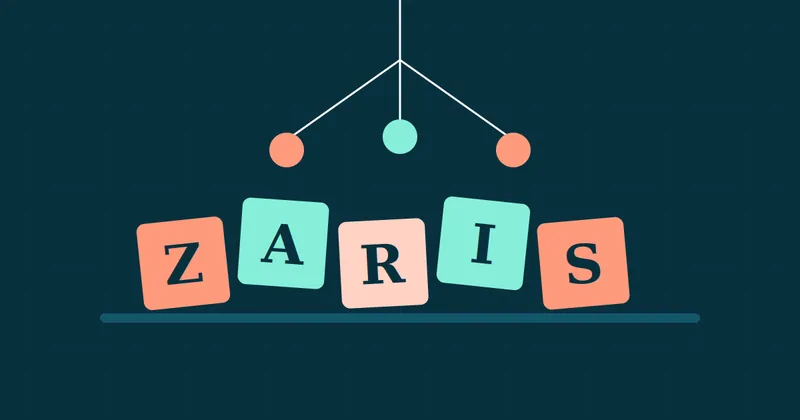
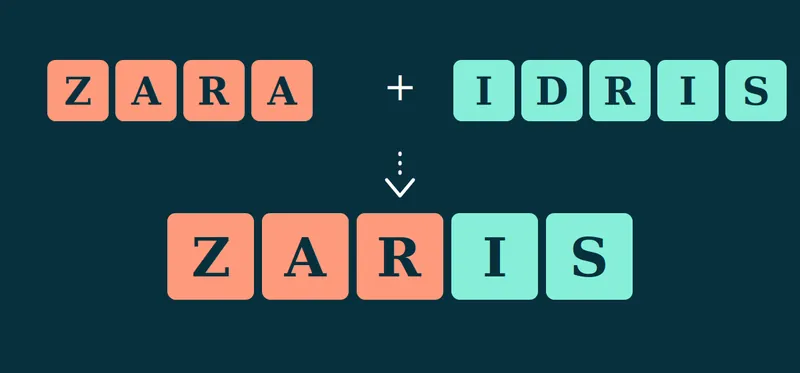
Take Zara and Idris as an example. The tool returns 28 blends for this pair. The highest scores include Idrara (94), Zaridri (94), Zaridr (92), Idrizar (92), Zaris (92), and Zaradris (92). Some are too long to use as a first name, and some read oddly. A few, such as Zaris, are short and clean.
That mix is normal. Scan the list, skip the clumsy ones, and keep the few that read cleanly.
What the flow score means
Each blend gets a score between 5 and 99. The score measures how easy the name is to say and how fairly it uses both parents' names.
| Score | Label | What it usually means |
|---|---|---|
| 80 and up | Smooth | Easy to say, balanced, and a good length |
| 65 to 79 | Good | Pronounceable with a few awkward spots |
| Below 65 | Bold | Unusual sound or length, so read it aloud first |
A "Bold" name is not a bad name. Some parents want something rare, and rare names often score lower. Use the label as a prompt to look more closely.
The rules behind the score are public. The tool adds points for a length of five to eight letters, for vowels making up a third to a half of the letters, and for two or three syllables. It subtracts points for runs of consonants and for awkward joins. You can read the full list in the pronounceability checklist.
What the gender-feel labels mean
Names do not carry a built-in gender. The tool looks only at word endings that are common in English-speaking countries. Names that end in "a" or "i" are often given to girls. Names that end in a hard consonant, such as "r" or "d", are often given to boys. Endings such as "n", "l", and "y" tend to feel neutral.
The tool turns those patterns into three labels. They read "Leans feminine," "Leans masculine," and "Gender-neutral feel."
These labels are a hint, nothing more. In many cultures the patterns are different. Many names are also used for children of any gender. If a name you love carries the "wrong" label, ignore the label.
Choosing a first name or a middle name
A blend can work in either spot. The right choice depends on how the name sounds and how much you want it to stand out.
A smooth blend with a score above 80 can work as a first name. It is easy to say, and teachers and doctors will pronounce it without much trouble. A rarer blend works well as a middle name. That lets you pair it with a familiar first name and still keep the link to both parents.
Say the full name out loud with your last name. A blend ending in "s" next to a last name starting with "s" can blur together. A blend ending in a vowel next to a last name starting with a vowel can create a pause. Catching these issues now is much easier than fixing them later.
From blend to final name
Use this process to narrow your list.
- Generate blends and save the ten you like most.
- Drop any that are hard to spell. A name that needs correcting every day gets tiring.
- Check meaning. A blend has no meaning of its own, so look up each piece in the languages your family speaks.
- Try nicknames. Say the name the way a friend or sibling might shorten it.
- Compare your blends with real names that have known meanings. The baby name generator can help with that.
- Pick three finalists and live with them for a week.
The meaning check matters more than people expect. Zara is an Arabic name linked to blooming flowers and radiance, and Idris is an Arabic name linked to study. A blend of the two inherits pieces of that, but the pieces may not combine into a meaning anyone would recognize.
Mistakes to avoid
- Choosing by score alone. A high score means the name flows. It does not mean you love it.
- Ignoring family pronunciation. Grandparents may say the name differently than you do.
- Skipping the initials test. Write the first, middle, and last initials together. Make sure they do not spell a word you would regret.
- Forgetting spelling. If three friends spell the name three ways, expect that to continue.
- Stopping too early. The first blend you like is rarely the best one.
What the tool cannot do
A tool like this has limits, and it helps to know them. It cannot judge culture. It does not know whether a blend looks like a word with a harsh meaning in another language. It cannot check whether the name is already well known as a brand, a character, or a place.
It also cannot predict how the name will feel in five years. Sounds that seem fresh now can feel dated later. A few minutes of searching and a few honest conversations with family do more for that than any score.
A step-by-step walkthrough
Here is how a typical session looks. Open the tool and type the first parent's name in the first box. Type the second parent's name in the second box. Pick a gender or name feel if you have a preference, or leave it on "Any."
Press the button. The results appear in a grid. Each card shows the blended name, with letters colored by their source. Letters from the first parent are coral, letters from the second parent are teal, and any shared letters are dark and underlined. That color coding lets you see at a glance whether both parents are present.
Under the name, you will see a bar for the score and a label for the method. You can filter by style with the buttons above the grid. "Smooth blends" shows only the classic blends and overlaps. "Short mashups" shows compact results. "Full name + part" shows blends that keep one name whole. A length menu lets you hide anything over six, eight, ten, or twelve letters.
When you find a name you like, press Save. The saved names collect in a bar at the bottom of the tool, and you can copy them all at once. A "Copy link" button creates a web address that holds both names, so you can send the exact same results to a partner or a parent.
Testing blends with a last name
A first name never lives alone. It sits next to a last name every day, so test the pairing early.
Say the full name three times. Listen for places where the sounds run together. A first name ending in "n" next to a last name beginning with "n" can create an odd stutter. A first name ending in a vowel next to a last name starting with a vowel can create a gap.
Look at the rhythm too. A two-syllable first name with a two-syllable last name feels balanced. A one-syllable first name with a long last name feels a bit short. A long first name with a long last name can feel heavy. None of these is wrong, but you should know which one you are choosing.
Finally, write the full name on paper and look at it. Some letter combinations look fine in sound but strange in print. A few minutes with a pen can reveal that.
Siblings and future children
If you plan to have more than one child, think about how the names will sound together. You do not need to match them. But a few simple checks help.
Check the initials of all the children. Siblings with the same first initial can cause mix-ups on forms, in classrooms, and in mail. Check the endings too. Three names that all end in "a" can feel repetitive when called together.
If you want a link between siblings, use the blending method again with a different pair. For example, you might blend the first parent's name with a grandparent's name for the second child. That gives each child a distinct name while keeping a family thread.
Spelling, documents, and records
A blend is often an invented spelling, so think about how it will look on paper. Birth certificates, passports, school records, and medical forms all need the exact same spelling. A mismatch can cause delays years later.
Some places also limit which characters a name may contain. A few U.S. states, including California, restrict birth certificates to the 26 letters of the English alphabet, which means accents and other marks may not appear. Rules vary by state and country, so check with your local vital records office before you commit to a spelling with special characters.
Finally, think about autocorrect. Many phones and email programs flag invented names as errors. That is a small annoyance, but it adds up over a lifetime.
Privacy and saved names
Names are personal data, so it helps to know where they go. When you type names into our tool, the blending happens in your browser. The names are not sent to a server and are not stored by us.
When you press Save, the name goes into your browser's local storage on your own device. If you clear your browser data, the saved names disappear. If you use another device, they will not appear there. Press Clear in the tool to remove them at any time.
The "Copy link" button is the one exception to keep in mind. It puts both names in the web address. Anyone who receives that link can see the names you typed, so share it with people you trust.
Involving family without losing control
Most parents find that relatives want a say. That can be sweet or stressful. A plan helps.
Share the shortlist, not the process. Send three finalists instead of the whole list, and ask which one feels best. That gives people a way to take part without pulling the choice in ten directions.
Listen for pronunciation problems. If an aunt says the name differently than you do, that matters. It shows you how the name will sound in the wider family. Listen for reactions that come from habit or taste, and treat those as opinions, not facts.
In the end, the choice belongs to the parents. A polite thank-you is enough for everyone else.
Frequently asked questions
Is a baby name combiner accurate?
It follows consistent rules, so its output is predictable. It cannot know family history or cultural meaning, so review every name yourself.
Can I use a blend as a middle name?
Yes. Many parents choose a familiar first name and use a blend as the middle name.
Are the names I enter stored?
No. The tool runs in your browser. Only names you choose to save are kept, and only on your device.
What if my names are very different in length?
The tool tries many cut points, so even a short name contributes at least two letters.
Do blended names have meanings?
A blend has no meaning of its own. Look up the pieces or use the baby name generator to find real names with known meanings.
How many blends should I expect?
In our tests, pairs returned between 16 and 47 results. Short names return fewer.
Next step
Open the baby name combiner and try both parent orders. Then read how to choose a baby name for a calm way to make the final call.