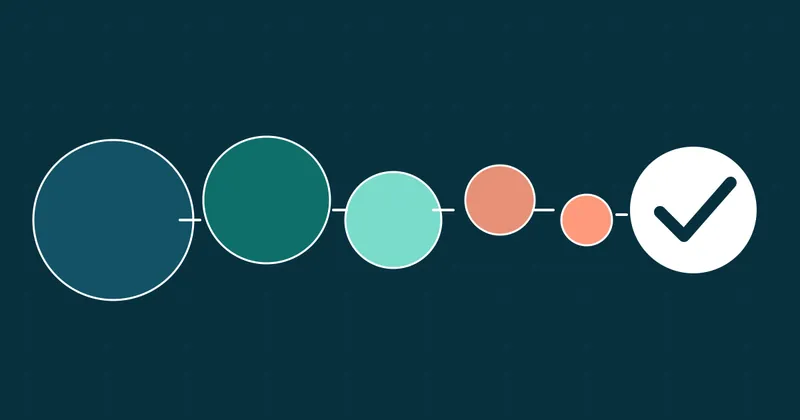
To choose a baby name, build a long list, cut it in rounds, test the finalists, and decide. That process works because it breaks one big decision into small ones. You do not have to find the perfect name at once. You only have to move from many names to fewer names, one round at a time.
This guide gives you seven steps. It also covers the practical side, such as legal limits, birth certificates, and what to do if you disagree with your partner. The steps work for any family, whether you have a long list or a blank page.
Narrowing a baby name list
Step 1. Agree on what matters
Before you collect names, talk about what you want. Write down your top three priorities. Each parent should do this alone first, then compare.
Common priorities include a family link, a clear meaning, an easy spelling, a classic feel, or a name that few others have. A few parents care about how a name sounds in two languages. Others care about nicknames.
When you know your priorities, you can cut names quickly. A name that fails your top priority can go, however nice it sounds. That saves a lot of back-and-forth later.
Step 2. Build a long list
Each parent writes ten to twenty names alone, without discussing them. Then you compare. A long list gives you room to cut.
Look for ideas in several places.
- Family names and their meanings.
- Blends of your own names, ranked by how well they flow.
- Names from the baby name generator, which can filter by gender and style.
- Themes such as nature names, strong names, or Arabic names.
- The Social Security Administration's yearly rankings, which publish data by birth year back to 1880.
Do not judge the names yet. The goal of this step is volume.
Step 3. Cut the list in half
Go through the list together and remove any name that either parent strongly dislikes. If one person says no, the name goes. Do not argue for a name at this stage, since it only slows things down.
This round should feel easy. You are not picking favorites. You are removing names that will never work. A list of twenty usually drops to ten.
Step 4. Run the tests
Test each remaining name with the same checks.
| Test | Question |
|---|---|
| Say it | Does it sound good with your last name? |
| Spell it | Can a stranger spell it after hearing it once? |
| Shorten it | Are the likely nicknames ones you like? |
| Initials | Do the full initials spell anything unwanted? |
| Meaning | Do you know what it means in your family's languages? |
| Search | Does an online search show anything you dislike? |
The pronounceability checklist goes deeper on the first two rows. The mistakes guide covers the rest.
Step 5. Picture the name over a lifetime
Imagine the name on a newborn, a school kid, a teenager, and an adult with a job. A good name works at every age.
Some names feel perfect on a baby and odd on a grown person. Others feel serious on a baby and fit an adult well. Picture a doctor, a teacher, a friend, and a neighbor saying the name. If it feels natural in each scene, it passes.
This step also catches names that depend too much on a trend. A name that sounds fresh today may sound dated in twenty years.
Step 6. Narrow to three
Pick three finalists. Say them out loud to each other every day for a week. Use them in sentences, such as "This is our daughter, Thena." You will notice which one feels natural and which one still feels like a trial.
Take notes during the week. Write down any reactions from family and friends, and any thoughts that come up. Patterns show up quickly. If one name makes you smile every time, that is a strong sign.
Step 7. Decide, then wait a day
When you have a winner, wait a day before you announce it. If it still feels right in the morning, you are done.
A pause helps because it removes the pressure of the moment. A name that seems perfect at midnight can feel less certain at breakfast. A name that still feels good after a night's sleep is likely to last.
When parents disagree
Disagreement is normal. A few ways to move forward can help.
- Give each parent a veto. Neither parent has to accept a name they dislike.
- Use both preferences. One parent picks the first name and the other picks the middle name.
- Use a blend. A name built from both parents' names can feel fair. Try the baby name combiner.
- Take a break. A pause of a few days can lower the pressure.
- Ask for a tiebreaker. A neutral third person, such as a trusted friend, can help you see which name fits better.
Avoid a contest in which one parent wins and the other loses. A name that one parent accepts out of fatigue can cause quiet regret.
Practical and legal points
A few practical rules apply in many places, though details vary by country and state.
In the United States, the hospital usually gives parents a form for the birth certificate, and each state sets its own rules for what the name can include. A few states, including California, limit birth certificates to the 26 letters of the English alphabet, so accents and symbols may not appear. Some countries go further. Iceland, for example, reviews new names through a naming committee and keeps a list of approved names.
Because rules differ, ask your hospital or local vital records office what applies to you. Also ask about the deadline for registering the name. It is short in many places.
If you change your mind later, most places allow a legal name change, though it takes paperwork and sometimes a fee.
Before or after the birth
Some parents choose a name before the baby arrives. Others wait to meet the baby. Both work.
If you choose in advance, you have time to think and can tell relatives. If you wait, you can see whether the name fits the child. Many parents do both. They pick two or three favorites ahead of time and decide at the hospital.
The only real downside to waiting is time pressure. A tired parent after a long day may not want to debate names. A short list made in advance solves that.
Choosing a middle name
A middle name gives you a second chance to honor someone or to add a sound you love. Many parents use it for a family name, a parent's name, or a name that would not fit as a first name.
Say the full name aloud, and watch the rhythm. A one-syllable first name often pairs well with a longer middle name. A long first name often pairs well with a short middle name. For more ideas, see baby names from parents' names.
Also check initials. The three letters appear on forms, monograms, and school items. Make sure they do not spell a word you would regret.
Which tool helps at which step
You can do the whole process on paper. A few tools can save time, though.
In step two, the baby name generator gives you ideas by gender and style, with meanings. The baby name combiner adds blends of your own names. In step four, the name combiner can show how a blend scores for flow, and the flow score gives you a quick check on sound.
In steps six and seven, put the tools away. Use your voice and your family. Say the names aloud, and notice how each one feels. A tool can find options, but it cannot tell you which one feels like your child.
An example from start to finish
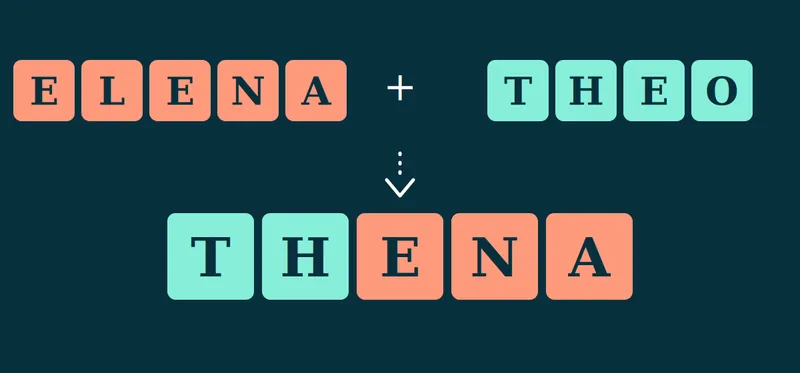
Here is how one family might run the process. Take two parents named Elena and Theo.
Their priorities are an easy spelling, a link to both names, and a classic feel. They enter their names in the combiner. The tool returns 24 blends. Thele and Thena both score 94, and Theolena scores 94. Theona scores 88.
They like Thena, but they worry that it sounds too close to Athena. They save it and keep looking. They also add real names from the generator, such as Clara and Elise, which share letters with Elena.
After a round of cuts, they keep three finalists. They say each name with their last name every evening for a week. By the end, one name stands out, and both parents smile when they say it. They wait a day, and the feeling holds. That is their name.
A timeline you can follow
If you like a schedule, this one works for many families.
- Second trimester. Talk about priorities and start a shared list.
- Early third trimester. Cut the list, run the tests, and narrow to five names.
- Mid third trimester. Pick three finalists and live with them for a week or two.
- Last month. Choose a favorite and a backup, in case the baby surprises you.
- After the birth. Confirm the name, and fill out the paperwork.
You do not have to follow this order. Many families do it in a few weeks, and some take the full nine months. The schedule just gives you a sense of pace.
After you decide
Choosing the name is only part of the work. A few steps follow.
Fill out the birth certificate form with care. Check each letter, since a typo can take months to fix. Share the name with family, and tell them how to say it. Update insurance, medical, and tax forms as needed, and keep the spelling the same on every one.
Finally, write a short note about how you chose the name. It will mean a lot to your child later.
Using meaning as a tiebreaker
When two names tie, meaning can break the tie. Look up each name in two sources and read the details. Some names have a single clear meaning. Others have several, and a few have meanings that vary by language.
Ask which story you would rather tell. A name that means light, a name that honors a grandparent, and a name that echoes a place you love are all good stories. Choose the one you would enjoy repeating, since you will tell it many times.
When one partner is not interested
Sometimes one parent cares much more about the name than the other. That can be a relief or a source of tension. Talk about it early.
If one parent has little interest, ask for a veto and not a vote. That means they can say no to names they truly dislike, and they do not have to propose any. The interested parent builds the list, and the other parent edits it. Both end up with a name they accept.
Check in later, too. A parent who shrugged at the start may form strong feelings once the shortlist gets real.
What your priorities point to
Your top priority often points to a method. This table links common priorities to the places to start.
| If you care most about | Start with |
|---|---|
| A link to both parents | Blends and middle names |
| A clear meaning | Curated names with origins |
| An easy spelling | Short, classic names |
| A rare name | Less common names from other languages |
| A family tradition | A grandparent's name in a first or middle spot |
Use the table as a starting point. You can change direction as the list grows.
Frequently asked questions
How early should we start?
Many parents start in the second trimester, but there is no rule. A few weeks of calm talking is enough.
Should we choose a name before the birth?
You can. Many parents keep a short list and decide after meeting the baby.
What if our families disagree with our choice?
Listen politely, then make your own decision. A name is the parents' choice.
How many names should we shortlist?
Three finalists is a good number. It gives you choice without overload.
Can we change the name after the birth?
In most places, yes. The process involves paperwork, and the rules vary by location.
What if we cannot agree at all?
Use one name as a first name and the other as a middle name. Or take a break and come back with fresh eyes.
Conclusion
A clear process makes naming calmer. Agree on priorities, build a list, test the names, and pick with confidence. Before you finalize, read baby name mistakes to avoid.